
Introduction
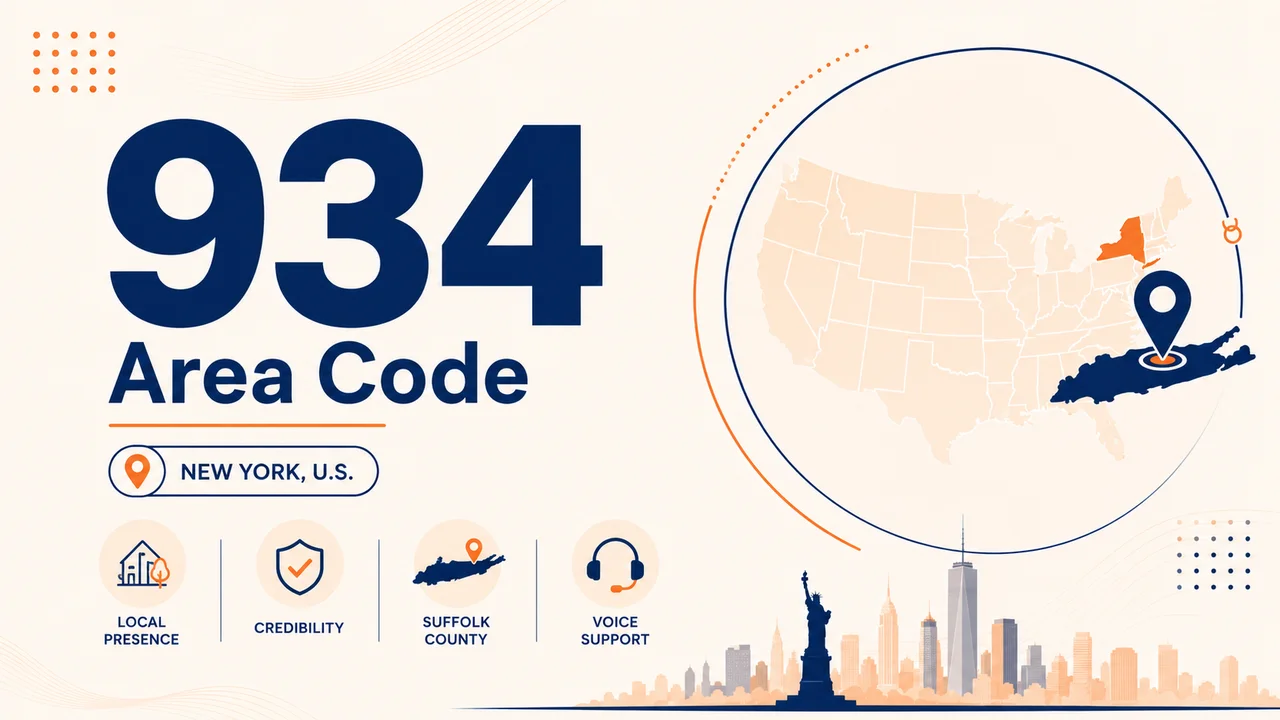
A call comes in from a 934 number and even a lifelong Long Islander pauses. Suffolk County? Telemarketer? The code is younger than the first iPhone, and most residents still assume their county runs entirely on 631. That hesitation is the whole story of 934.
It's a perfectly legitimate Suffolk County code. But because it has no history and no turf of its own, a 934 number reads as unfamiliar — sometimes even suspicious — to the exact people it's supposed to feel local to. Here's why that gap exists and what a Long Island business should do about it.
516 → 631 → 934: Long Island's Number Lineage
934 is the third layer in a number story that's been splitting and stacking for 25 years.
One Code for Two Counties
Until 1999, a single code — 516 — covered both Nassau and Suffolk counties. Long Island shared one prefix end to end.
Suffolk Gets 631
In 1999, Suffolk County split off with its own code, 631. For a generation, that became the Suffolk number — the one locals memorized and trusted.
Then Came the Overlay
By July 16, 2016, 631 had run low on numbers. Rather than split the county again, regulators overlaid 934 on the same map and made ten-digit dialing mandatory.
Why 934 Has No Turf of Its Own
This is the part that trips everyone up. An overlay isn't a place.
Same Map as 631
934 covers the exact same Suffolk County footprint as 631 — not a different town, not a different region. Geographically, the two are identical.
Only New Lines Get It
Every "original" Suffolk number is a 631. A 934 only gets handed out when fresh numbers are assigned, so the code has no built-in base of residents who recognize it as theirs.
The Recognition Gap
Here's where 934 breaks the usual rule that a local code earns trust.
Locals Know 631, Not 934
Decades of 631 trained Suffolk residents to read it as home. 934 never got that runway, so it lands as unfamiliar — and unfamiliar, on a ringing phone, often means ignore.
It Even Shows Up on "Avoid" Lists
Because it's young and heavily spoofed, 934 appears on more than one published list of area codes to be wary of. That's a reputation problem a genuine local business inherits through no fault of its own.
Where 934 Actually Reaches
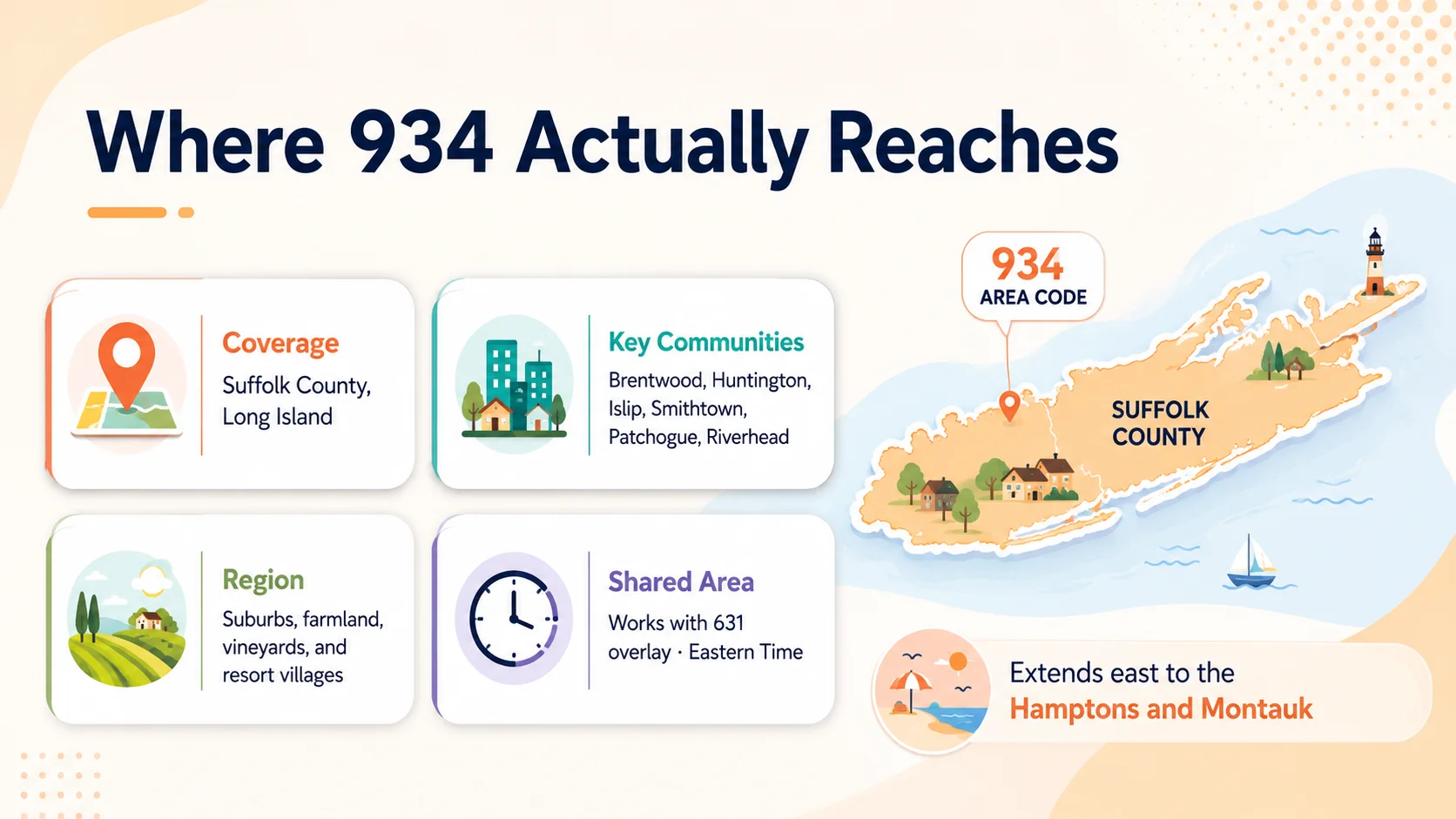
For the record, 934 covers all of Suffolk County — the eastern two-thirds of Long Island.
The Communities
Brentwood, West Babylon, Coram, Huntington, Islip, Smithtown, Patchogue, and Riverhead, stretching east to the Hamptons and Montauk on the East End.
The Texture
Dense suburban towns near the Nassau line give way to farmland, vineyards, and resort villages out east — all Eastern Time, all sharing 631 and 934.
What the Recognition Gap Costs a Business
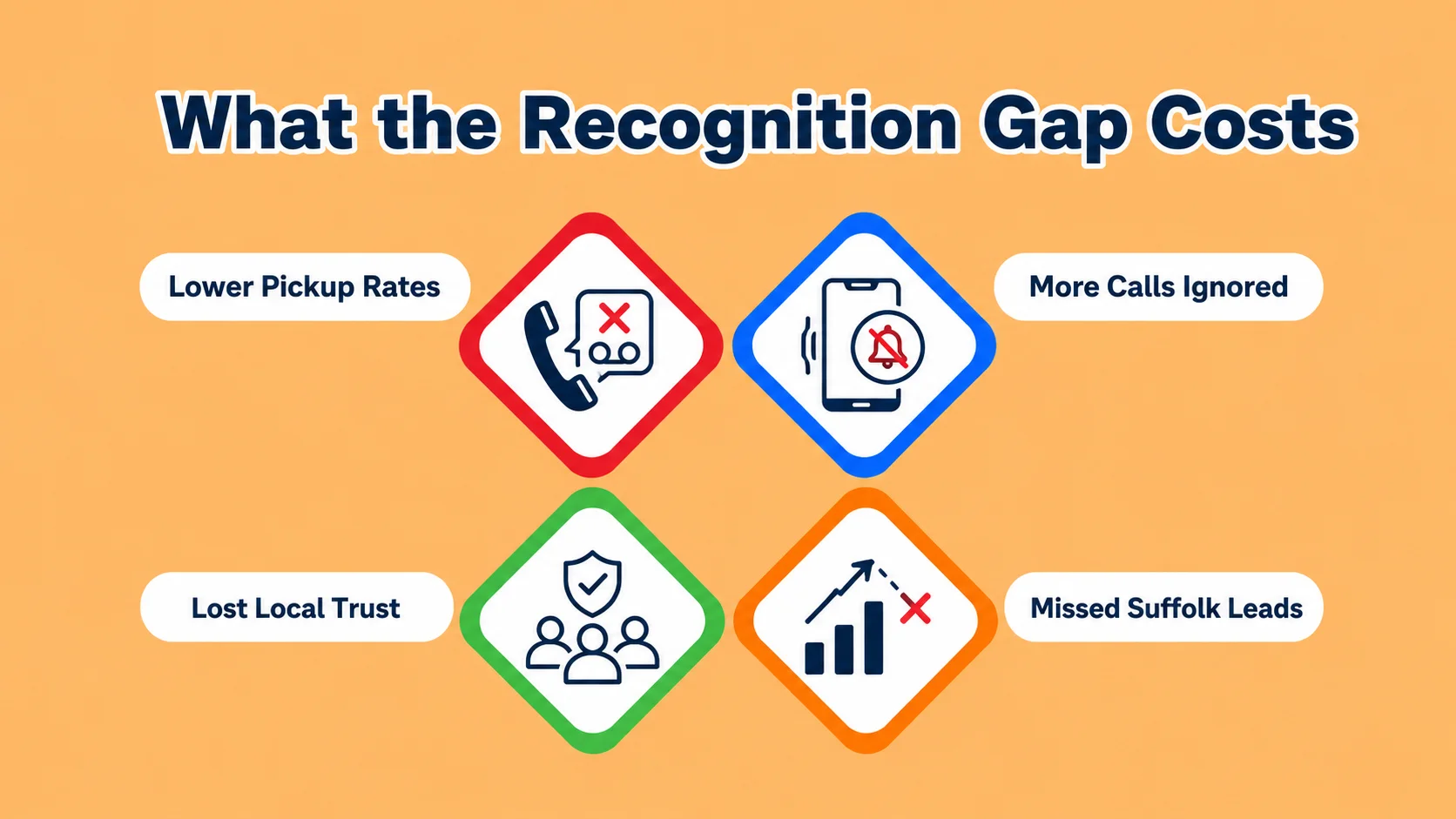
A number nobody recognizes is a number that goes to voicemail. For a Suffolk business, that's the real cost of 934.
Lower Pickups by Default
When a customer doesn't recognize 934 as local, your genuine call gets the same cold shoulder as a robocall. The prefix is working against you, not for you.
The Fix Is Identity, Not Just the Number
Displaying your business name on outbound calls — branded caller ID — does what the code can't: it tells the recipient who's actually calling before they decide to answer.
Spoofing Makes It Worse
The recognition gap is bad enough on its own. Spoofing pours fuel on it.
Few Bad Numbers, Loud Complaints
934 has a small pool of high-complaint numbers, but they draw the highest per-number complaint rate around — a concentrated burst of mortgage-loan, credit-card-debt, IRS, and fake-Amazon scams.
Neighbor Spoofing in Action
Fraudsters fake a 934 caller ID to look local, then dial Suffolk residents who can't tell the spoof from a real business. The FCC has warned about exactly this tactic for years.
631 or 934 — What Should a Suffolk Business Use?
Given the gap, the choice matters more here than in most overlay markets.
Prefer 631 When You Can Get It
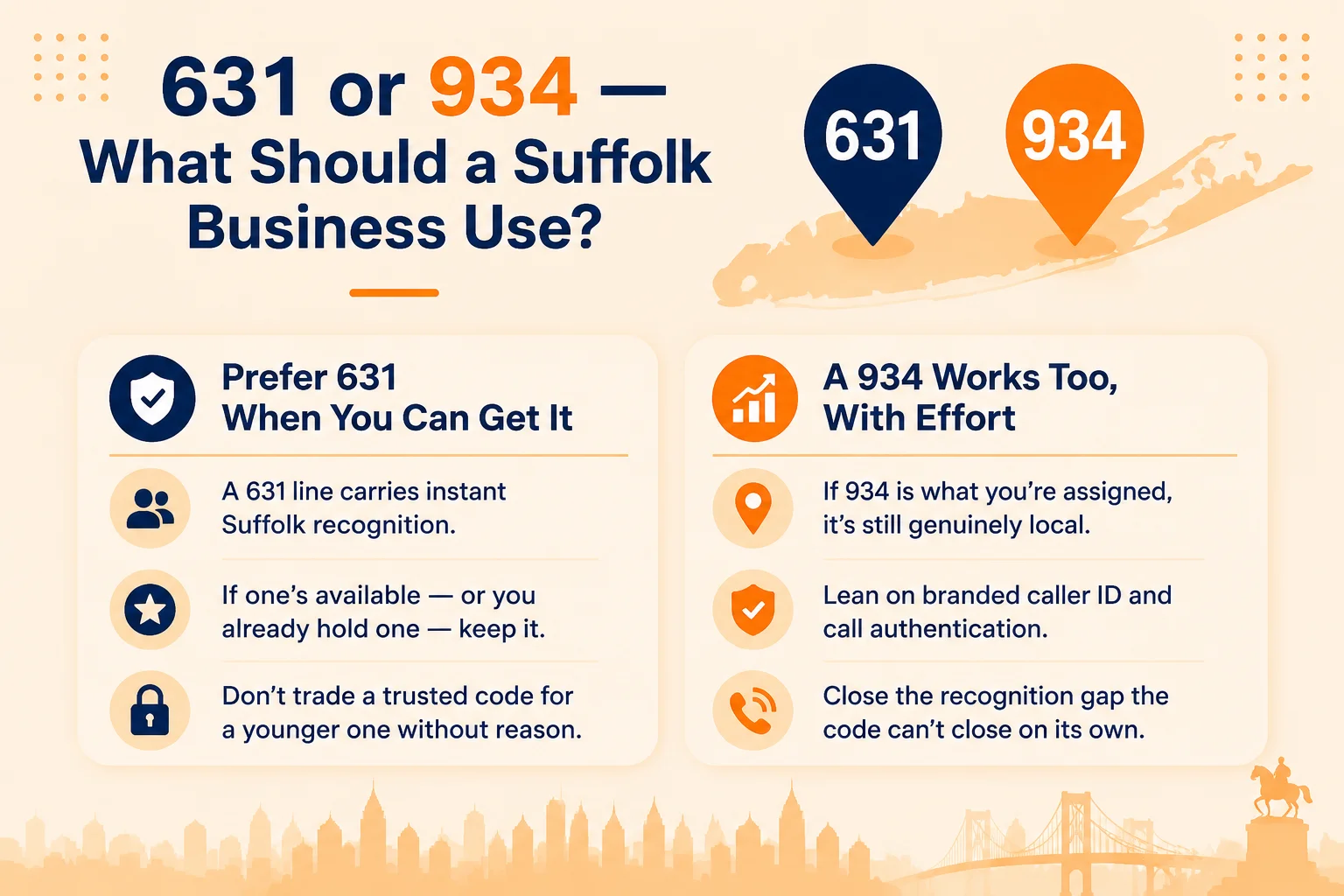
A 631 line carries instant Suffolk recognition. If one's available — or you already hold one — keep it. Don't trade a trusted code for a younger one without reason.
A 934 Works Too, With Effort
If 934 is what you're assigned, it's still genuinely local. Lean on branded caller ID and call authentication to close the recognition gap the code can't close on its own.
How to Get (and Keep) a Working Suffolk Number
You don't need a Suffolk storefront to ring as a Suffolk business. You do need to handle the recognition problem head-on.
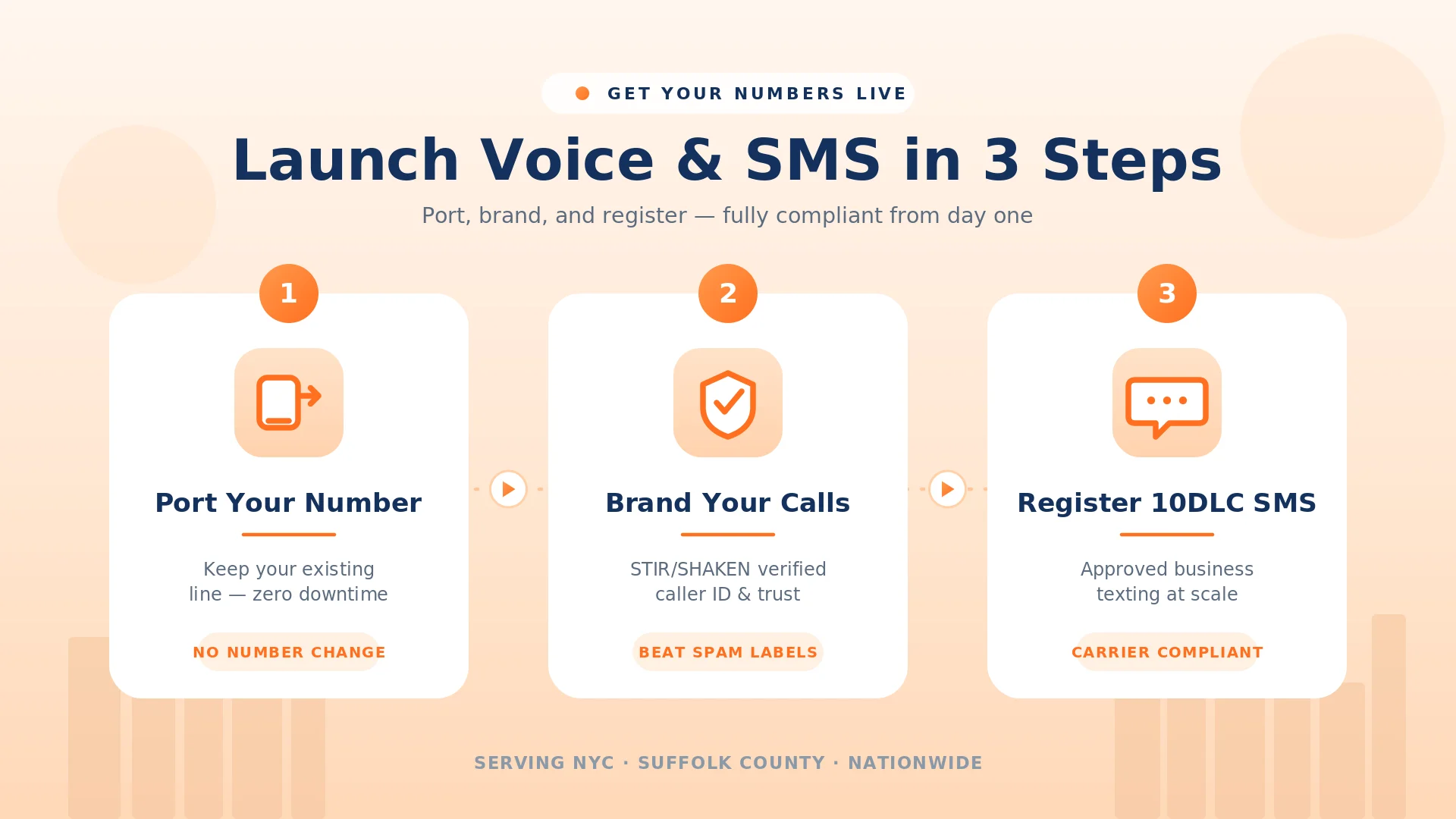
- Port the number you've built on — already advertising a 631? Port it so you keep its recognition and equity. Letsdial ports numbers in and out free, with no lock-in.
- Sign and brand every call — use a provider that applies STIR/SHAKEN attestation at the carrier level and displays your business name. Call authentication plus a recognizable name is the antidote to a low-recognition code.
- Register 10DLC for texting — texting Suffolk customers? 10DLC registration keeps your [business SMS](/products/sms-mms) out of the carrier filter.
The Honest Verdict on 934
The 934 area code is fully legitimate — it just hasn't earned the local recognition 631 spent two decades building, and spoofers have made an unfamiliar code look outright risky. That's a real headwind for Suffolk businesses, but a beatable one.
Conclusion
Hold a 631 if you've got it, brand and authenticate every call you place, and make sure something answers when your team can't. Do that, and a Suffolk number performs no matter which of the two codes is on it.
Get a Suffolk County number
Written by Tyler Brennan · Jun 13, 2026
Reply to the author